
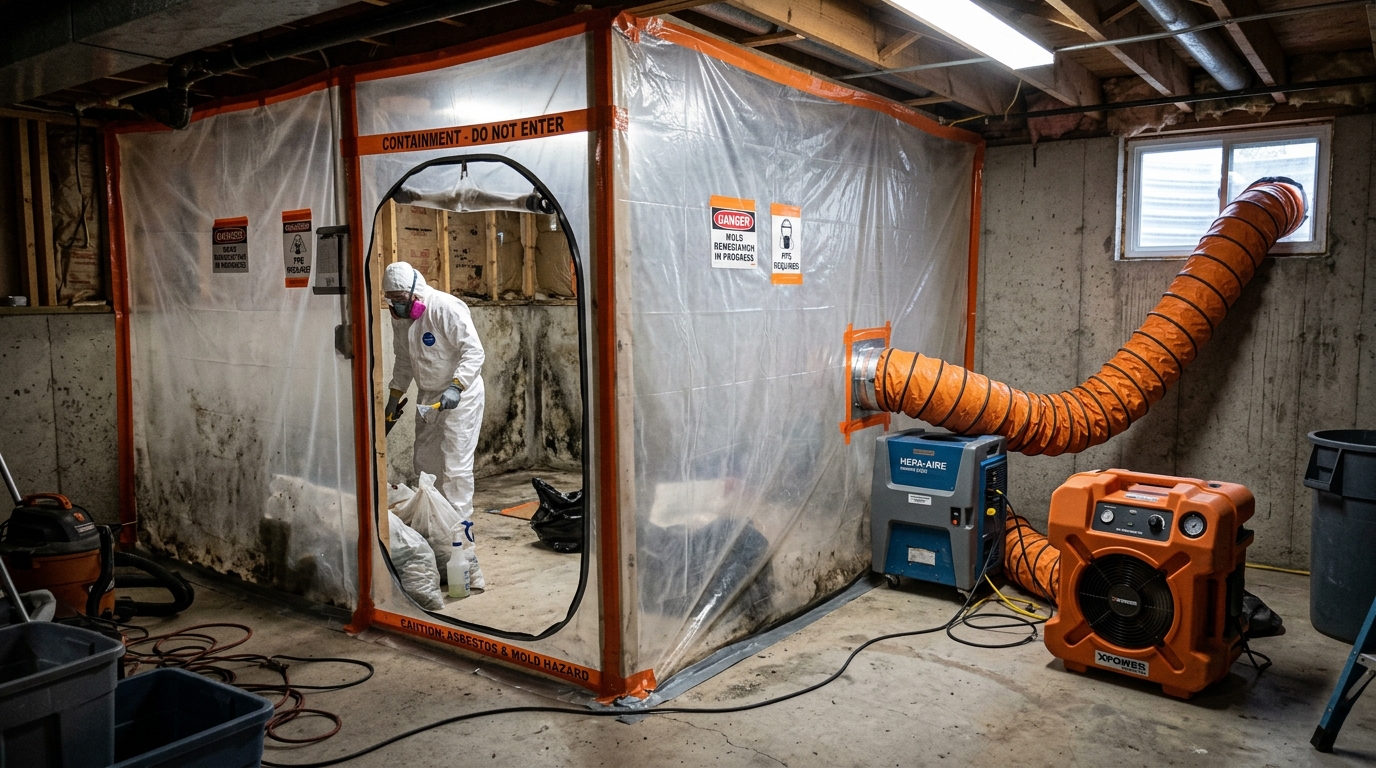
DIY can be reasonable for a small accessible patch on a cleanable hard surface after the moisture source is fixed. Call a professional for extensive growth, concealed damage, suspected HVAC contamination, sewage, or a job you cannot safely contain. The decision depends on materials and exposure as well as square footage.
DIY and Professional Removal: Side-by-Side
The EPA's home cleanup guidance says homeowners can usually handle an area smaller than about 10 square feet, with exceptions for water damage, contaminated water, HVAC, and health concerns. That threshold is a starting point, not a guarantee that a job is safe.
| Factor | DIY cleanup | Professional remediation |
|---|---|---|
| Cost | Supplies, protective equipment, disposal, and your time; obtain current retail prices | Written quote for assessment, containment, labor, equipment, and agreed verification; repairs may be extra |
| Time | A small surface job may fit into one session, followed by drying and rechecking | Scope and drying govern the schedule; demolition and reconstruction add separate stages |
| Effectiveness | Useful for accessible hard surfaces when the moisture cause is resolved; cannot reach concealed contamination | Can address inaccessible materials and broader removal when included in the scope; recurrence remains possible if the source persists |
| Safety | You must select protection, control exposure, and judge when to stop | Experienced crews plan containment and work controls appropriate to the job; occupants may need restricted access |
| When DIY is OK | Small accessible patch, clean water source, sound cleanable surface, and no relevant health or access concern | A professional assessment is still an option when any part of the job is uncertain |
| When to call a pro | Stop when growth extends into cavities, damaged porous materials, ducts, or contaminated water areas | Choose experienced help for extensive, recurrent, hidden, or difficult-to-contain damage |
3 Practical Scenarios and Recommendations
These are illustrative household situations, not claims about completed customer jobs.
Scenario 1: A 2-Square-Foot Patch on a Window's Metal Frame
DIY is a reasonable option if the patch is confined to the hard surface and condensation has been corrected. Wear appropriate gloves, goggles, and an N95 respirator; clean with detergent and water and dry completely. Avoid spreading debris to adjacent finishes. If surrounding drywall is wet or the patch returns, reassess the source instead of repeating cleanup.
Scenario 2: A 12-Square-Foot Drywall Patch After a Pipe Leak
Arrange professional assessment because the visible area exceeds the small-job guideline and porous materials may be affected. Give the contractor the plumbing repair record and wetting timeline. Ask whether insulation and the wall cavity need inspection and how demolition will be contained. Surface spray does not establish that the back of the wall is clean.
Scenario 3: A 4-Square-Foot Patch Beside a Return Vent After a Sewer Backup
Call a contractor experienced in contaminated-water cleanup despite the small visible patch. The water source and possible HVAC involvement outweigh size. Keep occupants away from the affected area and seek advice before using a potentially contaminated system. A surface wipe cannot address sewage contamination or duct conditions.
Before You Choose: Answer 4 Questions
- Confirm where the water came from. Unknown or contaminated water changes the cleanup requirements.
- Identify the affected material. A metal frame and soaked drywall need different responses.
- Check the full visible extent without demolition. Record separate patches and areas you cannot inspect.
- Decide whether you can work without exposing others. Health concerns, shared air pathways, and limited access can make professional help the better choice.
Ask about professional mold cleaning when the surface is salvageable but access or exposure control makes the work difficult. A good proposal explains both what will be cleaned and what cannot be saved.
5 DIY Decision Questions
Does bleach make moldy drywall safe to keep?
No; a surface treatment does not prove porous material is clean throughout. Moldy drywall may require removal. Never mix cleaning products, and follow each product's instructions.
Can I paint over a cleaned-looking stain?
Wait until the growth is removed and the material is dry. Paint cannot solve a continuing leak or concealment problem. Ask for reassessment when the stain returns.
Is a household vacuum enough for cleanup?
A standard vacuum is not a substitute for controlled mold cleanup. Do not use it to collect suspect debris. Ask which HEPA equipment and containment the scope requires.
What should I ask before hiring a remediation company?
Request relevant experience, references, a written scope, and completion criteria. Ask how the company will protect adjacent spaces and who handles moisture repairs.
Does professional removal guarantee mold will never return?
No; lasting prevention depends on keeping the repaired area dry. Review any warranty's coverage and exclusions and keep records of follow-up moisture checks.
Discuss your basement's materials and water source with Littleton Mold Defense, 12356 N Dumont Way, Littleton, CO 80125, (720) 791-0798.
Basement Mold Removal Cost & Scope Calculator
Estimate professional mold remediation costs in Littleton, CO based on square footage, severity, and basement type.