
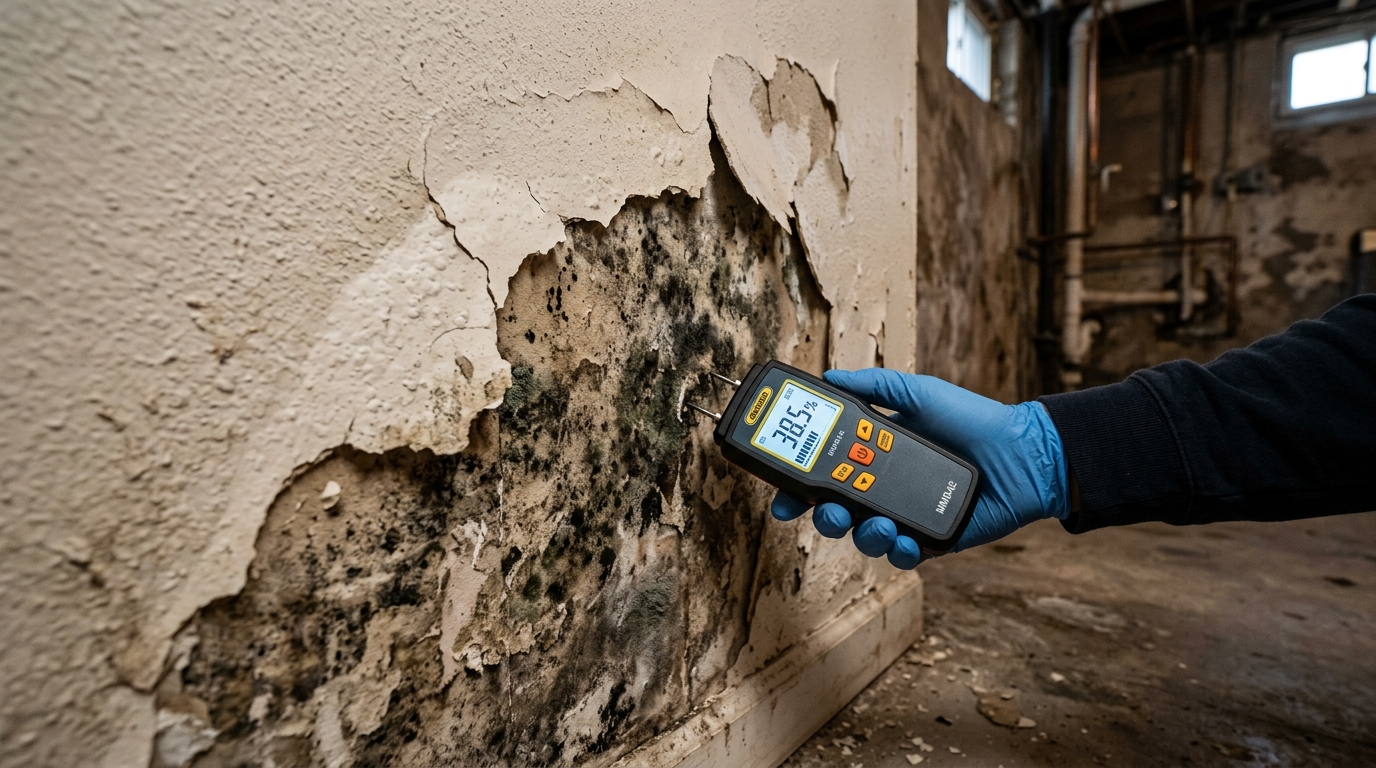
Visible growth, recurring dampness, or a persistent musty smell warrants a moisture investigation. Use this 8-sign checker to record what you observe in your Littleton basement. A checked box identifies a reason to investigate; it does not prove a mold species, diagnose an illness, or measure hidden contamination.
Check Your Basement for These 8 Signs
Urgency levels below are practical inspection priorities: investigate soon, act today, or keep out and get professional help. One high-priority sign matters more than your total score.
A recurring odor can point to concealed damp materials. What it means: inspect around stored items, carpet edges, and accessible plumbing without disturbing walls. Urgency level: investigate soon; act today if the smell follows new water damage.
Suspected growth needs removal and a moisture-source check. What it means: photograph the patch and estimate its area without touching it. Urgency level: act today to arrange an assessment if it is extensive, hidden, or on deteriorating porous material.
A changing stain suggests the water source is still active. What it means: compare dated photos after snowmelt, rain, and appliance use. Urgency level: act today to locate the leak; a dry old stain alone does not confirm mold.
Repeated surface wetness gives nearby materials a moisture supply. What it means: note which surfaces are wet and when; room humidity alone may miss a cold-surface problem. Urgency level: investigate soon and correct recurring condensation.
Material damage can signal moisture behind the finish. What it means: arrange a leak and cavity assessment rather than sanding or painting the spot. Urgency level: act today; keep clear of sagging ceilings and unsafe electrical areas.
Repeat growth suggests the moisture source or contaminated material remains. What it means: record previous cleanup dates and whether the spot follows storms or irrigation. Urgency level: arrange professional assessment promptly before another surface treatment.
Delayed drying raises the chance of concealed contamination. What it means: record the wetting and drying timeline, including areas beneath carpet. Urgency level: act today. CDC guidance calls for drying after flooding within 24–48 hours.
Symptoms deserve medical advice and a building check, but they do not identify mold as the cause. What it means: note timing and other exposures such as dust or cleaning chemicals. Urgency level: stop exposure and seek medical advice; severe breathing trouble requires emergency care.
What to Do If You Checked 3 or More
Arrange a professional moisture and mold assessment rather than repeating cosmetic cleanup. The 3-box threshold is a practical prompt to act, not a validated diagnostic test. Active flooding, suspected sewage, or suspected HVAC contamination deserves professional attention even with only 1 checked box.
- Record the pattern. Photograph each location and note the date, recent weather, and any plumbing event.
- Stop incoming water if you can do so safely. Stay away from standing water near electrical equipment and do not disturb suspect wall cavities.
- Ask for a source-based assessment. Give the inspector your checklist and request a written description of affected materials and the moisture repair needed.
- Pair removal with moisture correction. Review moisture control services so the repair addresses why the area stayed wet.
If you checked 1 or 2 boxes, investigate those locations and follow up after the moisture correction. A low score does not rule out hidden mold. Do not use a normal-looking room or the absence of symptoms as clearance.
5 Symptom-Checker Questions
Does white powder on concrete count as mold?
Not automatically; mineral deposits can resemble pale growth. Photograph the deposit and check for dampness. Have uncertain material evaluated instead of scraping it into the air.
Can a basement smell musty without visible growth?
Yes, the moisture source may be beneath finishes or among stored belongings. Start with accessible wet areas. An odor does not establish how much mold is present.
Should I buy a test kit before calling?
A moisture inspection is usually the better first step when there is visible growth or a clear dampness problem. CDC does not recommend routine home mold testing; ask what a proposed test would help decide.
What if only one household member has symptoms?
Different people can respond differently to indoor exposures. Tell a clinician about the timing and the building conditions. Another person's lack of symptoms does not resolve the moisture problem.
Should I peel back wallpaper to check a stain?
Leave suspect finishes in place until the assessment. Opening a concealed area can disturb growth and enlarge the cleanup task. Provide photos and the leak history instead.
Bring your 8-sign checklist to Littleton Mold Defense, 12356 N Dumont Way, Littleton, CO 80125, (720) 791-0798.