
Prevent basement mold by stopping incoming water, keeping materials dry, and checking 5 zones every month. Walk through foundation walls, floors, ceilings, HVAC, and storage areas in that order. Mark a task complete only after the moisture issue is corrected; use dated photos to track spots that return.
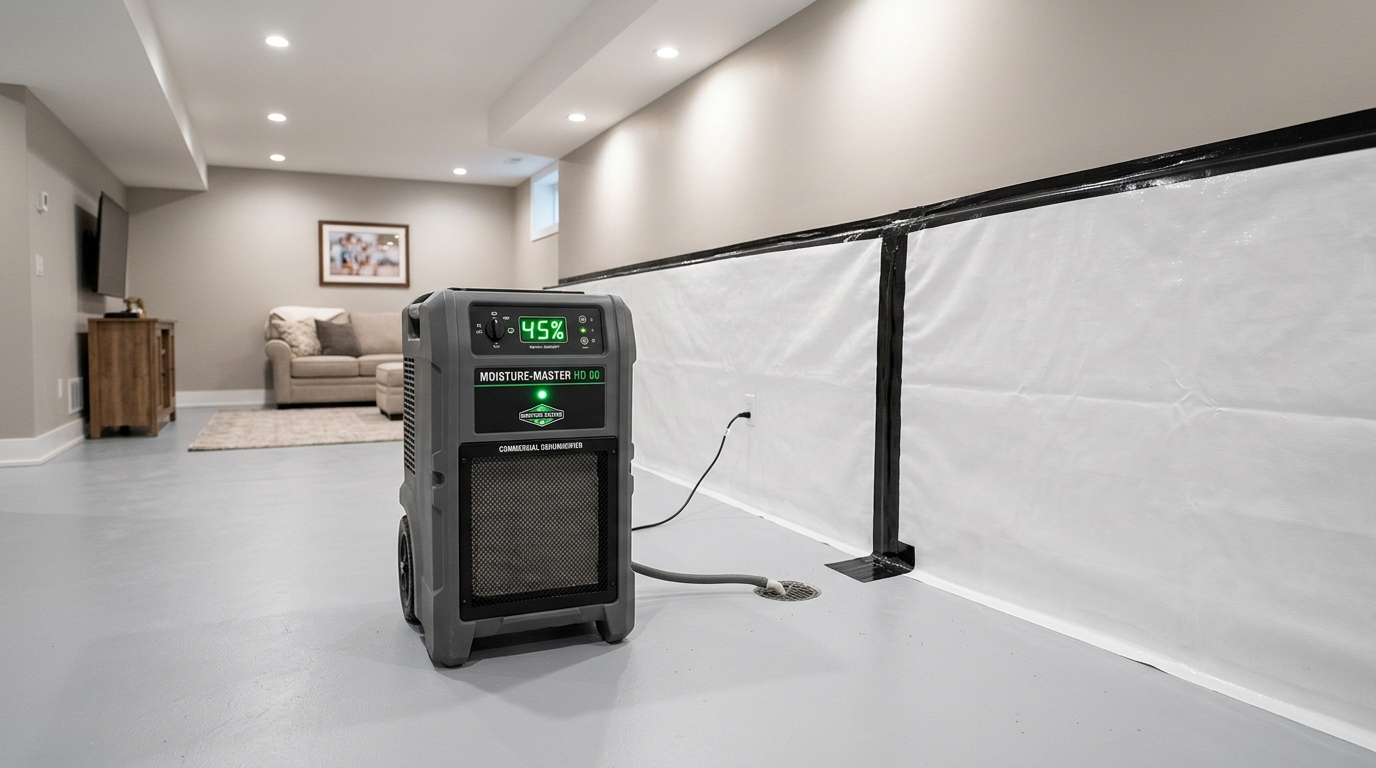
Keep a hygrometer downstairs. The EPA recommends indoor relative humidity ideally between 30% and 50%, and below 60%. A room reading does not prove a concealed wall cavity is dry.
Zone 1: Foundation Walls — 5 Checks
- Photograph new stains, dampness, or deposits; compare them after rain and snowmelt.
- Water should drain away from the building without creating a problem for neighboring property.
- Inspect during a watering cycle and adjust the heads that wet the house.
- Arrange help if the well retains water; do not block an egress window with storage or covers that prevent escape.
- Record width and location rather than treating every crack with the same sealant or hiding it behind paint.
Zone 2: Floor and Laundry Area — 5 Checks
- Check monthly and after moving a washer or other water-connected appliance.
- A dry surface can conceal damp padding; arrange assessment when an odor or stain persists.
- Record the test and verify the outlet route before the season that usually brings water to your basement.
- Investigate recurring backup rather than covering a drain or moving boxes over it.
- Start safe drying promptly after clean-water damage; seek professional help for contaminated water or materials you cannot dry.
Zone 3: Ceiling and Overhead Plumbing — 4 Checks
- Note whether wetness follows showers, dishwashing, or other fixture use.
- Photograph drips and arrange a plumbing repair.
- Avoid installing shelves or storage that prevents leak inspection.
- Arrange assessment before touching it; wet overhead material can fail.
Zone 4: HVAC and Humidity Control — 5 Checks
- Use the same location and time so changes are easier to compare.
- Check that water reaches the intended drain without pooling or overflowing.
- Schedule service for leakage or a blocked line.
- Change filters on the manufacturer's schedule using a rating the system supports.
- Ask a qualified contractor to correct indoor discharge or disconnected ducting.
Zone 5: Storage and Finished Rooms — 5 Checks
- Keep the lowest shelf high enough to inspect and clean beneath it.
- Check boots, sports equipment, and fabrics after use.
- Move accessible pieces monthly to look for dampness without disturbing suspected growth.
- Clean, dry bins can reduce future contact with damp floors; they do not make wet contents safe to store.
- Investigate a returning musty odor before adding more storage.
Close Out Your 24-Point Walkthrough
Assign a repair date to every unchecked moisture task. Record the location, observed problem, person handling it, and follow-up date. Recheck after the repair and the next comparable water event. Recurring dampness deserves a source assessment; suspected growth calls for a removal plan rather than a prevention checklist alone.
Before finishing or remodeling a basement, resolve seepage and ask a qualified building professional to specify a moisture-appropriate wall assembly. Review mold prevention services when your checklist identifies more than one recurring wet zone.
5 Prevention Questions
Do sealed plastic bins prevent mold inside them?
Only dry contents should go into storage. Sealing damp fabric or paper traps its moisture. Inspect and dry items first.
Is a 45% room reading enough to finish my basement?
No; check the foundation and materials before enclosing them. A hygrometer measures room air, not moisture behind a wall or beneath flooring.
Should I seal every foundation crack myself?
Have leaking, widening, or displaced cracks evaluated first. The appropriate repair depends on movement, water entry, and the wall construction.
Will a higher-rated HVAC filter solve a wet basement?
No; filtration does not repair leaks or remove water from materials. Use a system-compatible filter and correct the moisture source separately.
Who should complete the checklist in a rented home?
Tenants can record accessible observations and report problems; owners should coordinate building repairs. Send dated photos through the normal maintenance channel and avoid unauthorized demolition or equipment changes.
Review your unfinished repair tasks with Littleton Mold Defense, 12356 N Dumont Way, Littleton, CO 80125, (720) 791-0798.
Colorado Basement Mold Prevention Scorecard
Check off the preventive safeguards present in your Littleton home to calculate your real-time Basement Defense Score.